
Build in public: what it actually costs, what it gets you
One real founder's build-in-public story: $18k revenue, 100+ paying users, and getting cloned in public. What the clone couldn't copy is the actual point.
- A real build-in-public account (u/Many_Breadfruit9359, r/SaaS, 148 upvotes): a founder posted their product publicly, got harshly criticized at launch, iterated in public, reached $18k revenue and 100+ paying users, then got cloned, similar landing page, matching pricing.
- The actual cost of building in public is exposure. Your concept, your pricing, and your landing page become copyable the moment they are visible. The clone in this account shipped fast, with none of the validation work behind it.
- The clone underperformed anyway. What it copied was the surface. What it could not copy was the year of public feedback that shaped the product, or the audience that already trusted the original.
- The channel is not equally valuable for everyone. Per the same thread's own comment discussion, build in public disproportionately reaches other founders and builders, not general consumers, it works best when your actual customers are the same people watching your feed.
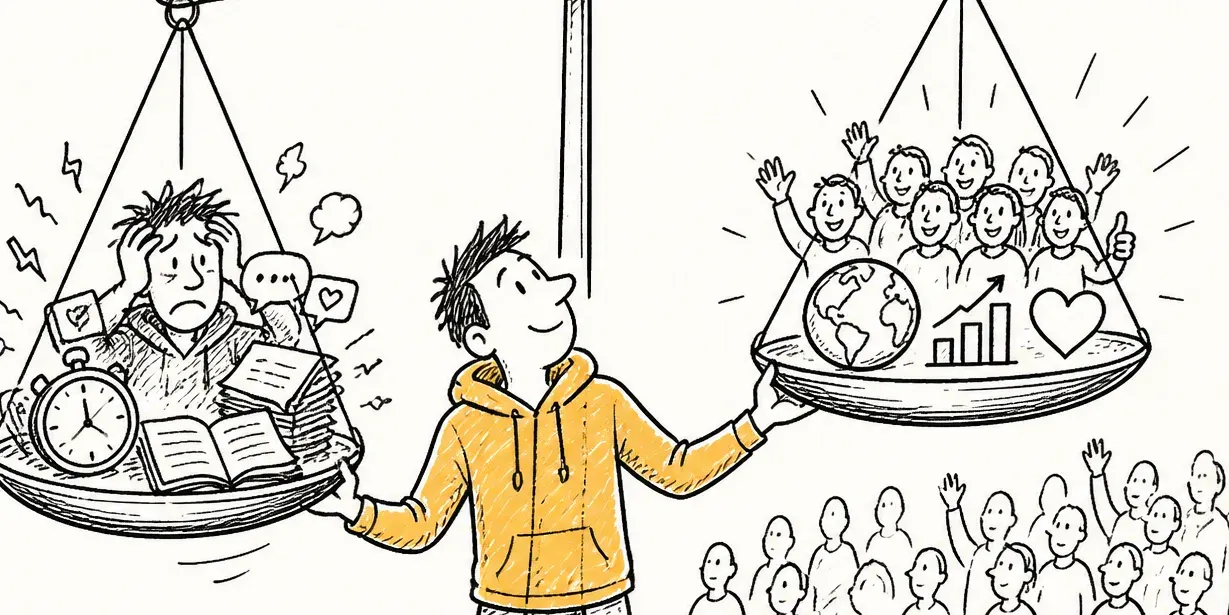
Build in public costs you the element of surprise: the moment your product, your pricing, and your progress are visible, they're copyable by anyone watching. What it gets you, when it works, is something a copy can't reproduce, a validated product shaped by real public feedback, and an audience that already trusts you before a clone shows up.
That's not a theory. It's what happened to a real founder who posted their experience to r/SaaS a little over a year ago, and it's worth reading in full before deciding whether build in public is worth your team's limited time.
What actually happened
The founder, posting as u/Many_Breadfruit9359, launched a product called BigIdeasDB, a database of real problems and startup ideas pulled from Reddit threads, G2 reviews, and Upwork listings. The first public reaction was rough: people called it lazy, said the ideas weren't unique, and dismissed it as scraped data with no real value.
They kept building in public anyway. Every piece of criticism became a fix: a smarter analysis layer, better filters, sorting, categories, the ability to build custom problem pipelines. None of that happened privately. Each fix went back out to the same public thread that had criticized the earlier version, so the next round of feedback was reacting to a genuinely different product, not a restated pitch. Shipping that many real fixes solo, on a public clock, is the same shift already reshaping what one person can actually own end to end once an AI agent handles a growing share of the implementation.
Months later, the product had reached $18,000 in revenue and more than 100 paying users, with real testimonials citing hours of market research saved. That's not a huge number by SaaS standards, but it's a real, disclosed one, from a product that started as something its own audience called lazy and low-value.
Then someone copied it. Same concept, a similar landing page, pricing that matched almost exactly. The copy shipped fast, because it skipped the part that took the original founder months: the public feedback loop that shaped every decision along the way.
What the clone couldn't take
The clone's results fell flat. Per the original founder's own account, the analysis felt thin and the results didn't go as deep, it looked the same at a glance but didn't carry the same weight. Their conclusion, stated plainly in the post: a copycat can take your landing page, but not your validation, your process, or your audience.
That's the real trade build in public asks you to make. You give up the protection of building quietly. In exchange, you get a product tested against real, often unkind, public opinion, months before a quiet build would have surfaced the same problems the hard way.
The saas seo strategy equivalent of this trade is technical: fix the basics nobody's watching. Building in public is the opposite bet. You're deliberately building somewhere everyone's watching, betting the feedback is worth the exposure.
When build in public actually works, and when it doesn't
The most useful part of that Reddit thread isn't the original post, it's the argument that broke out underneath it. One commenter, with 60 upvotes behind them, made the case that build in public mostly produces copycats and unwanted competitors, and that random followers gathered from posting online are useless if your actual customers aren't other founders.
The reply that mattered most came a level down: that critique only holds if your ICP genuinely isn't other founders. BigIdeasDB's actual customers, the 100+ people paying for it, are exactly the indie hackers and founders who'd be reading a build-in-public post in the first place. The channel worked for this specific product because the audience watching the journey and the audience buying the product were the same people.
That's the caveat most build-in-public advice skips. If you're validating an idea worth building for other developers or technical founders, an audience of founders watching your public progress is close to your actual buyer. If your product is for a completely different audience, dentists, retail managers, home cooks, the same channel mostly gets you an audience of other builders with no reason to buy what you're selling, plus a much shorter head start before someone in that same builder audience decides to copy you.
What this actually means for a small team
Before treating build in public as a default GTM channel, answer one question first: are the people who'd watch your progress the same people who'd pay for the result? If yes, the trade in this account holds up. You're exposing your idea to exactly the audience whose feedback makes it better, and whose trust survives a copycat.
If your buyers are somewhere else entirely, the math changes. You're still paying the exposure cost: a copyable landing page, visible pricing, and a real head start handed to whoever clones you fastest. But you're paying it without the audience-match that made the payoff real for BigIdeasDB.
The founder in this account didn't get to $18k in revenue because they posted often. They got there because the criticism was real, the audience giving it had actual buying power, and they kept shipping through months of public feedback a quieter build would never have surfaced. A copycat can still take the landing page. What they can't take is that specific, unglamorous history, and neither can you, for a product whose actual audience isn't watching.